Context on the element
Notes, tags, and links to deeper diagrams belong to the box they describe, so one diagram can serve both the overview and the detail.
Diagrams that carry their own context, and live in git
Architecture diagrams get unreadable once they hold enough detail to be useful. Context-Heavy Diagrams (CHD) keeps the canvas clean and puts the detail in the file: notes, tags, images, and links to deeper diagrams on each element. It is free, open source, and runs offline on your own machine.
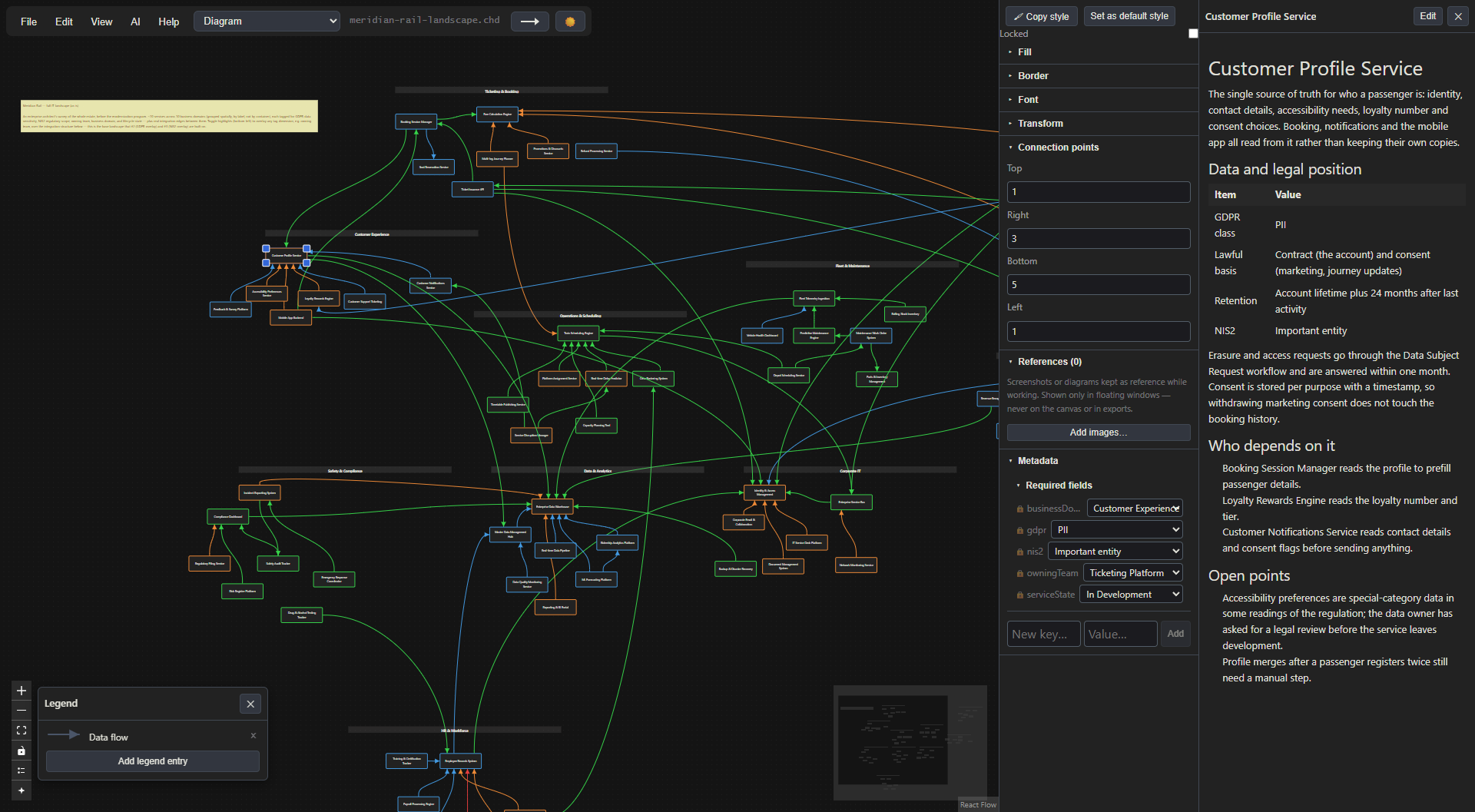
Notes, tags, and links to deeper diagrams belong to the box they describe, so one diagram can serve both the overview and the detail.
Diagrams as plain, human-readable files in your repo, whose changes can be tracked and visually compared. Avoid depending on a separate wiki that drifts out of date.
Assistants can read and edit diagrams through integrations built for it, and every change can be inspected afterwards.
No account, no server, and no network access. Your diagrams stay on your machine.
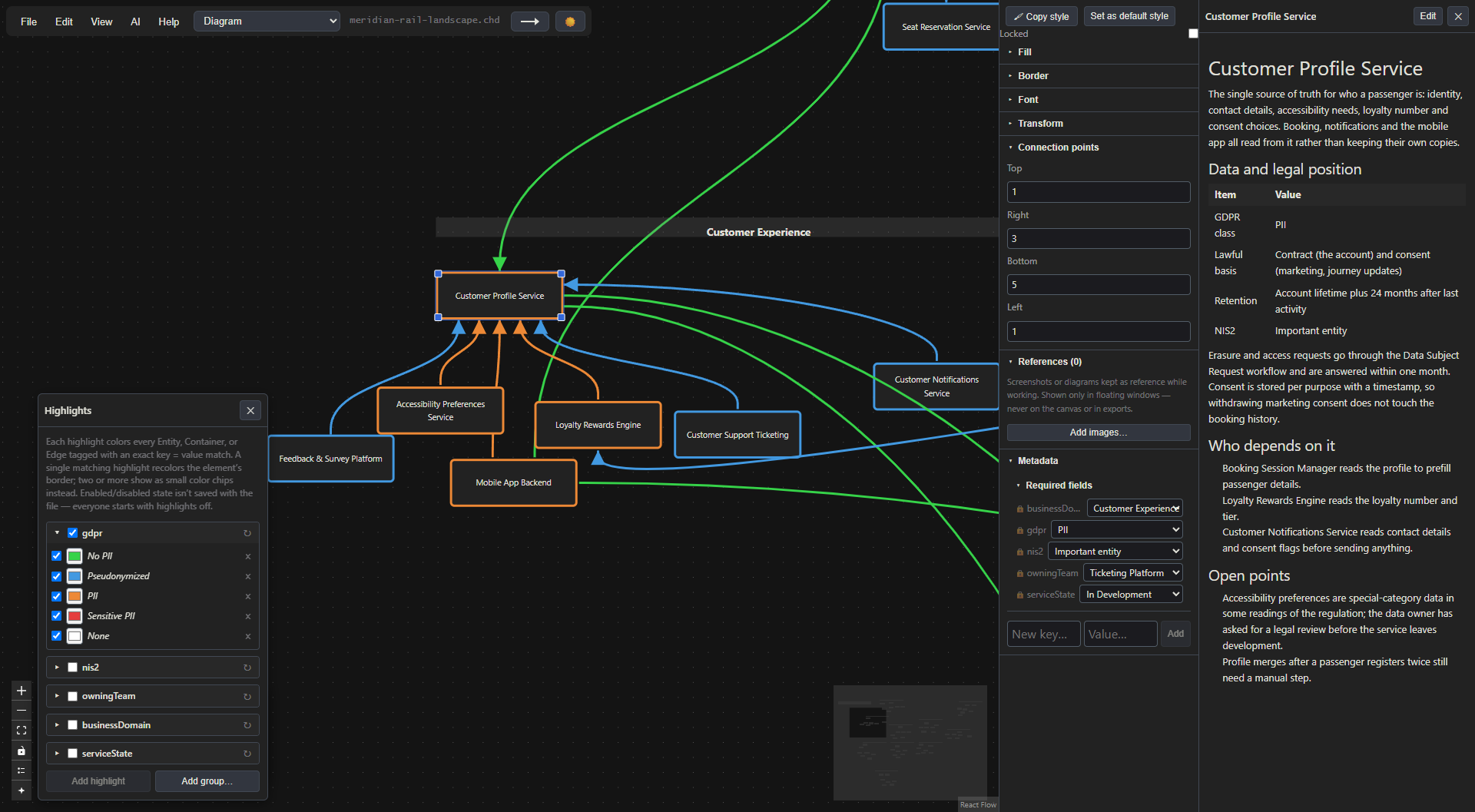
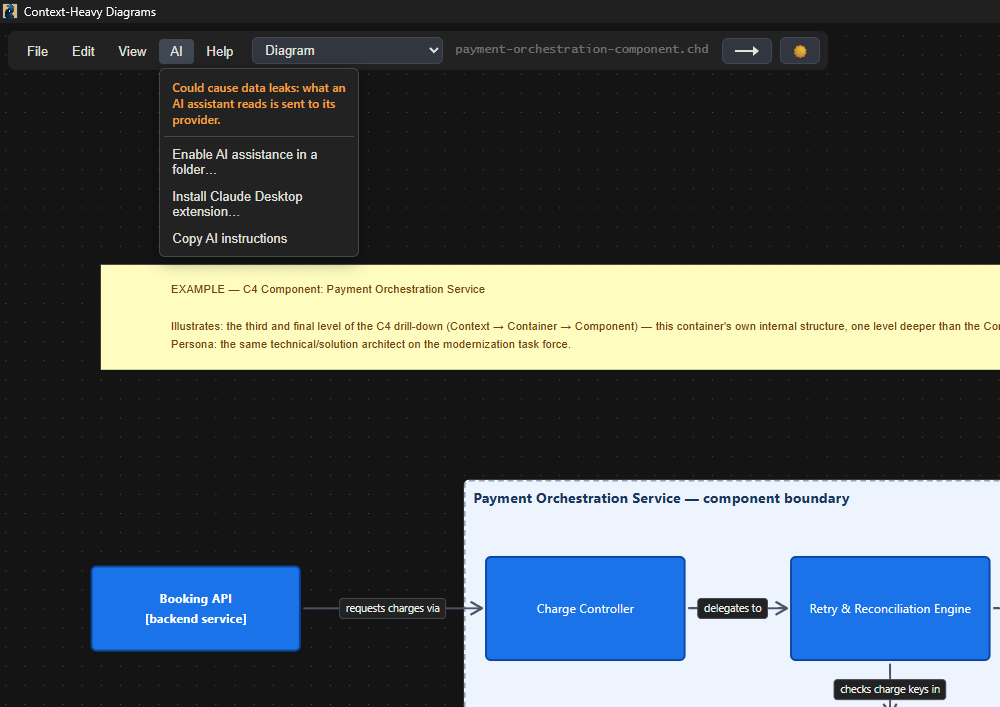
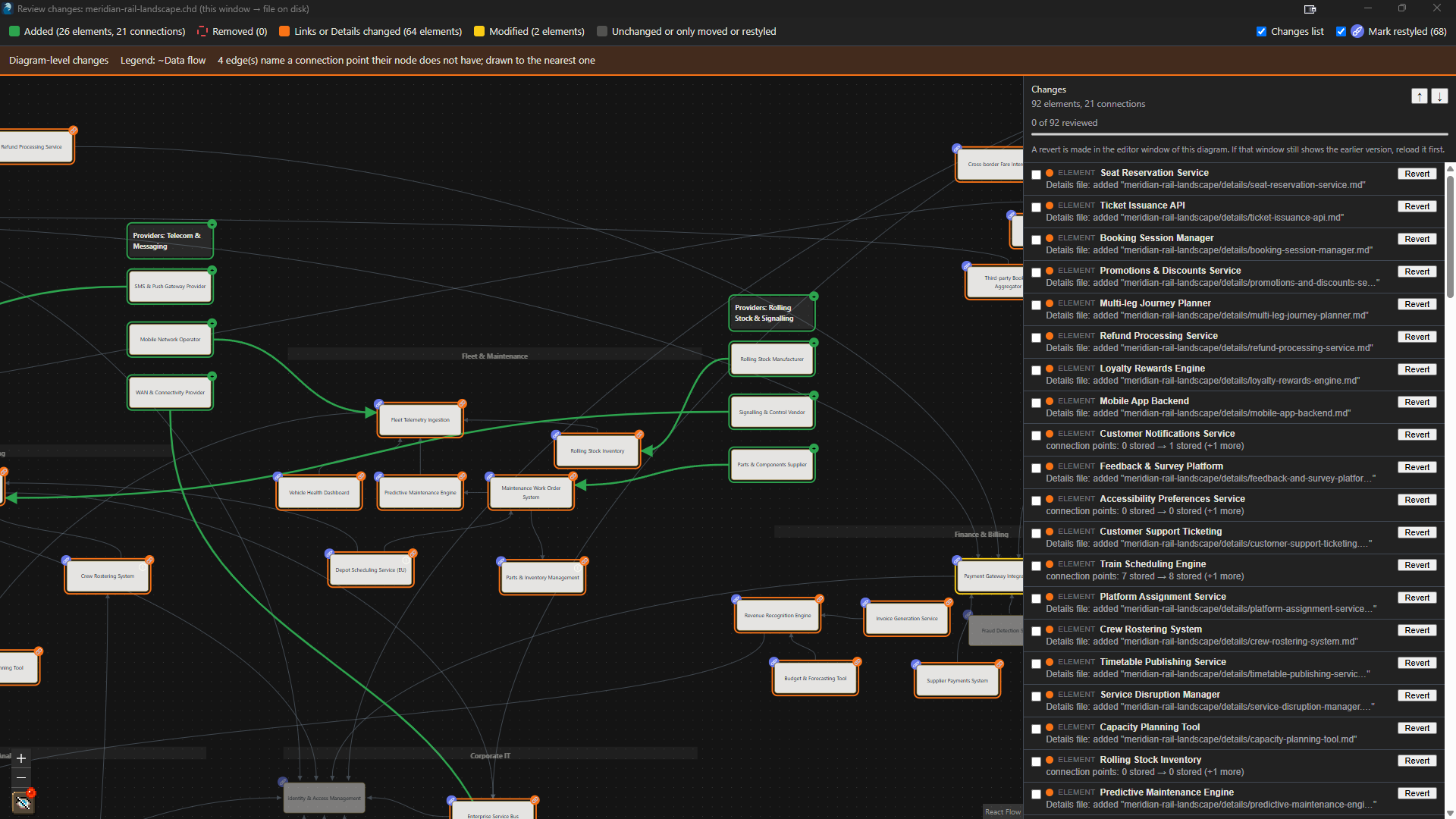
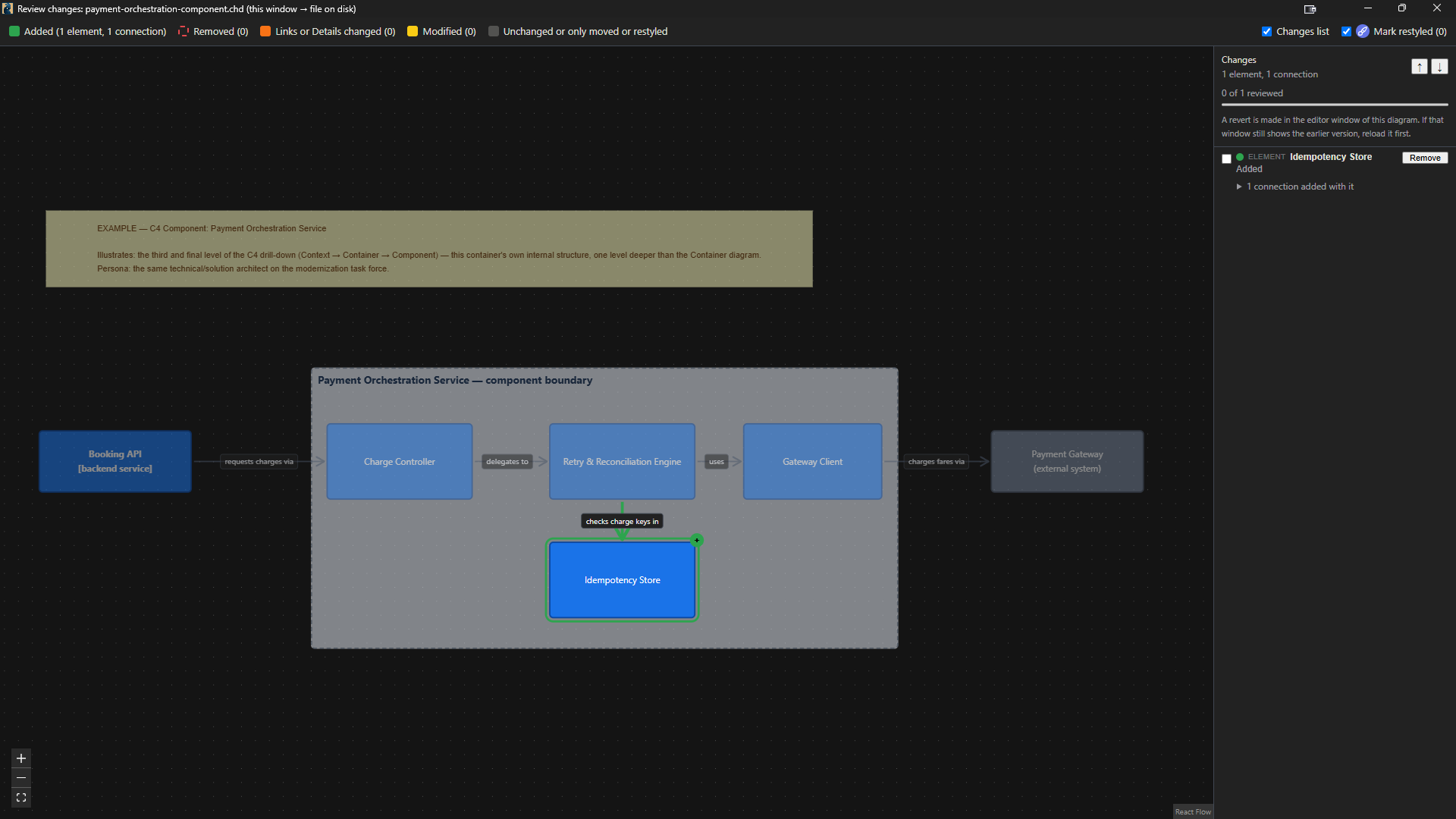
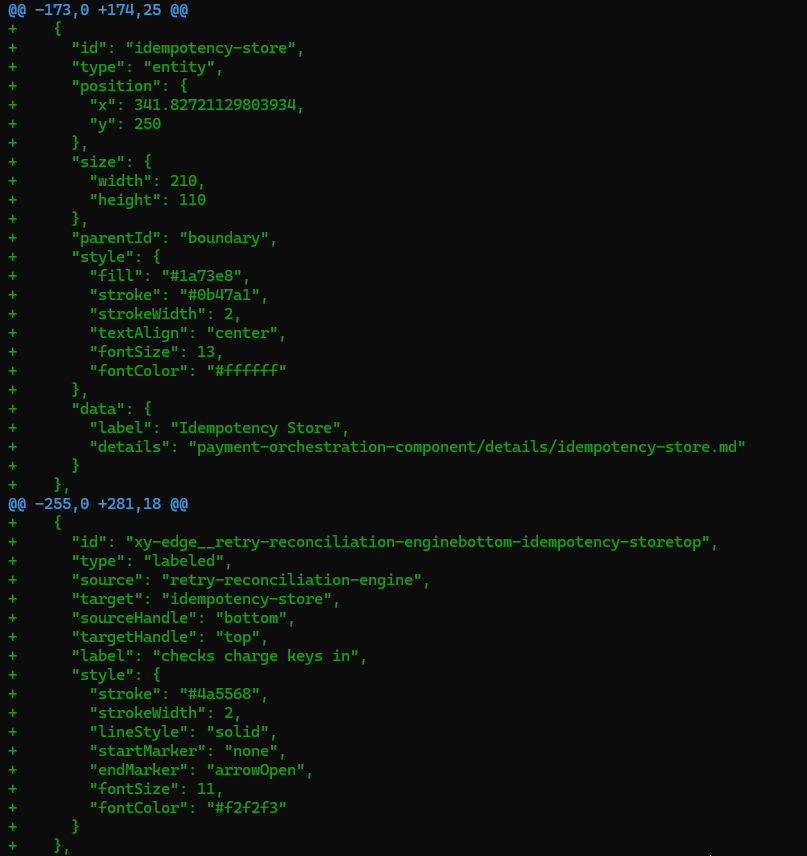
It is built for architects and developers, from strategic overviews down to technical detail, and it works as a general diagramming tool too. It fits best when the context and the relationships between views are the point, and when you want diagrams you can review like code.
It is not the right tool for everything. If you need real-time collaboration, standard notations with large shape libraries, or an enterprise architecture platform, use a tool built for that. CHD works well alongside such tools, but is not a replacement for them. The comparison page goes through other tools and use cases in detail.
An early release, developed in the open. The README has the current state, what is supported, and how to get it.